
not sequir-I stand corrected. thank you,Jose.
|
|||||||||||||||||||||||||||||||||||||||||||||||||||
|
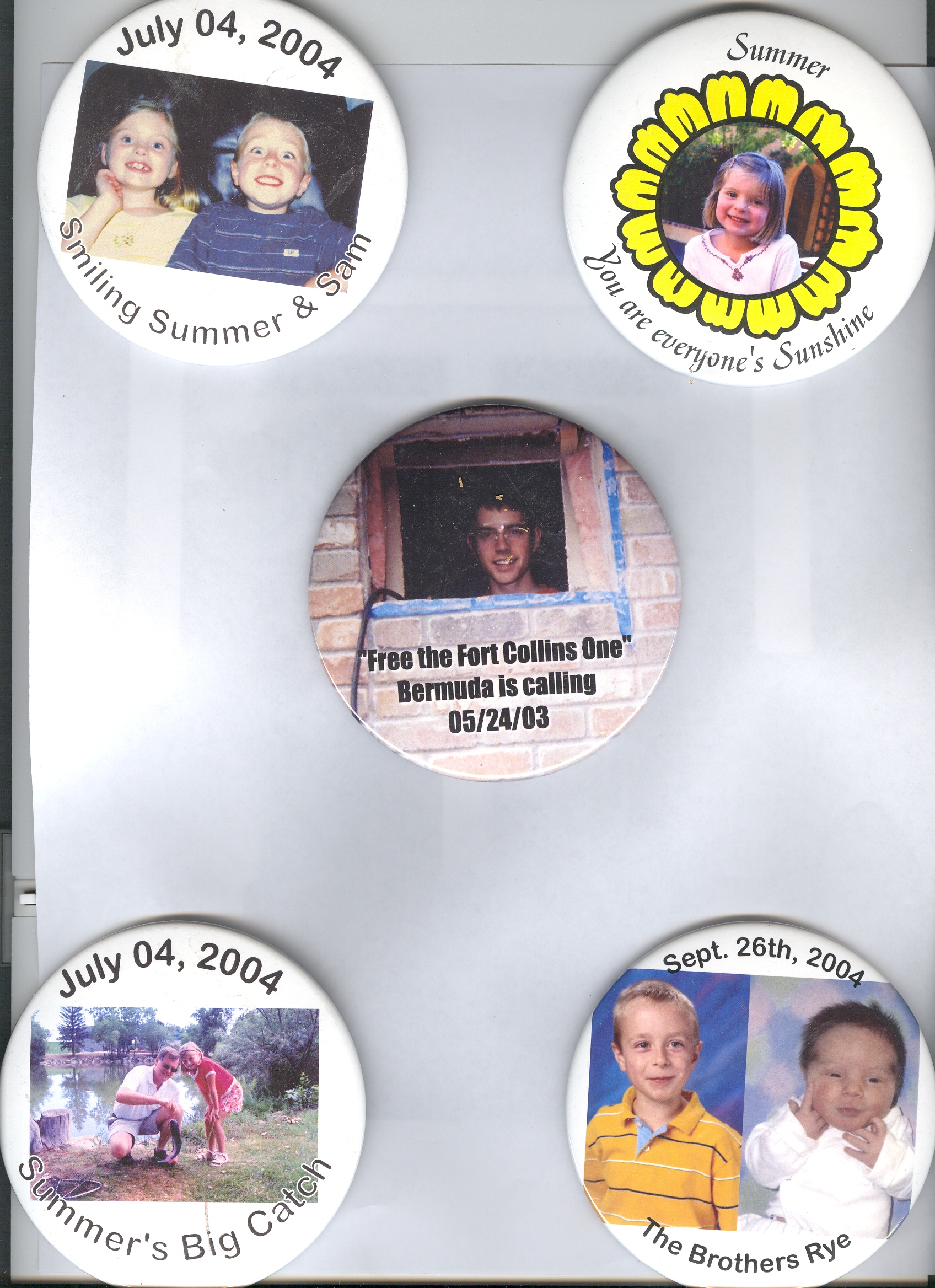
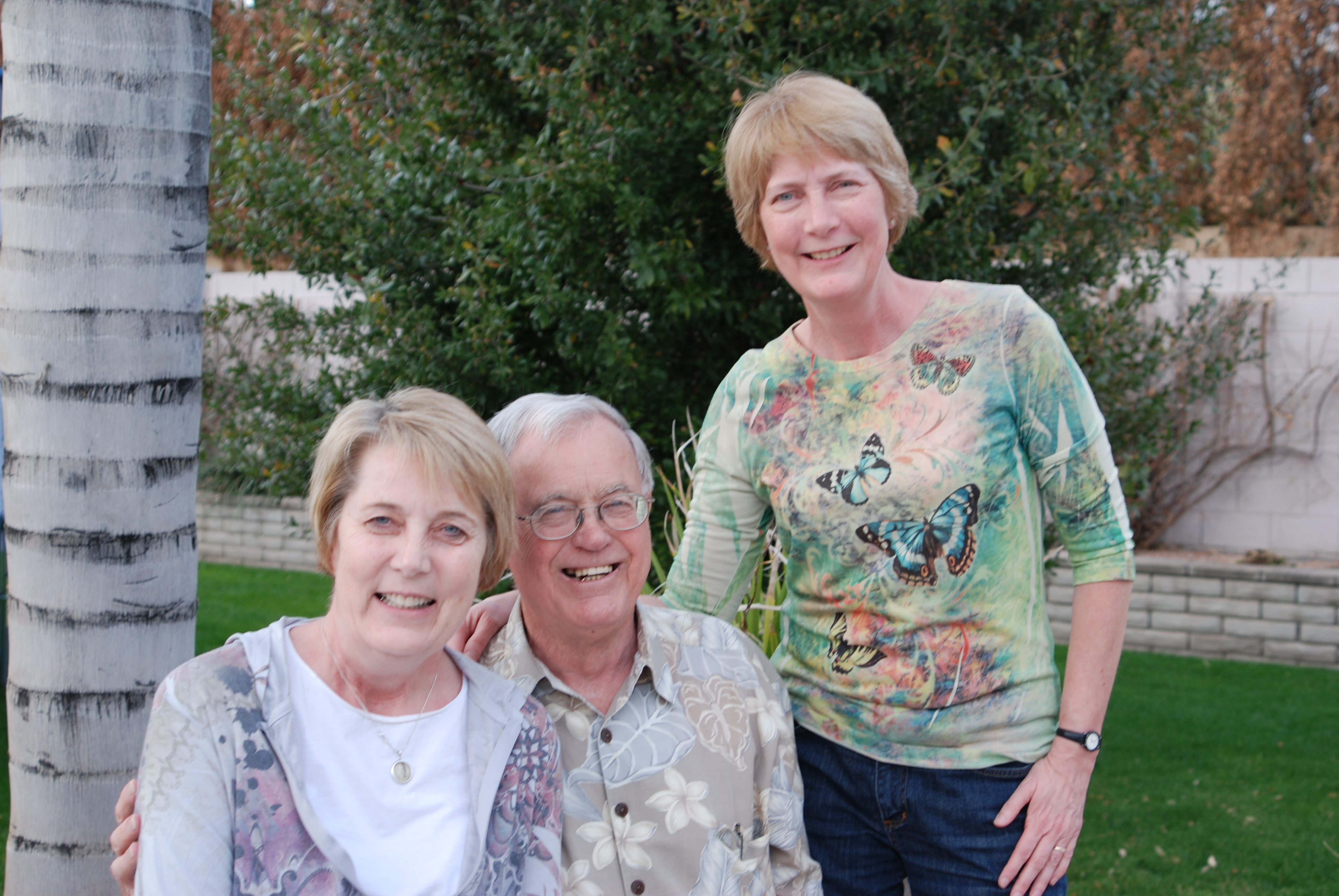
not sequir-I stand corrected. thank you,Jose. Community Profile Economic Development News & Events Contact Us Sitemap Search Links Agenda Caterpillar Facility Coming to Seguin > Click HERE to view Commercial Real Estate Journal article. > Click HERE to view a 4 minute video. Where is Seguin, TX? > Click HERE to visit our interactive map, showing major surrounding cities and available sites. The Seguin Economic Development Corporation would like to thank the 2006 Texas Regional Economic Development Summit Sponsors. Click here for Sponsors. Seguin Economic Development Corporation (SEDC) welcomes you to its official Web site. Here you’ll find a variety of business assistance resources from financing programs to real estate opportunities and more. If you do business in Seguin or are interested in doing business in Seguin, www.seguinedc.com can benefit your business. We hope you will visit www.seguinedc.com often. The Seguin Economic Development Corporation is a board comprised of business professionals from diverse segments of our business community. The SEDC sets priorities and works on projects and initiatives to generate future growth and job development in Seguin. Working together with city, local and state officials, the SEDC is tasked with the creation, attraction, retention and expansion of businesses in the community. With the support of our local partners, the SEDC, in the past 5 years alone, has successfully assisted 16 companies. These efforts have resulted in $7,351,005.00 in community investment, including a 250,000 square foot state of the art warehouse and distribution facility, as well as a cutting edge educational center and thereby contributed an additional 560 new jobs to the community. We our proud of the programs and incentives we have generated to help meet the continuing growth needs of our business community. A not-for-profit, public organization, the SEDC strives to provide one-on-one attention for both current and potential businesses and their needs. We present customized incentive packages, attempting to generate a win-win for both the business and the community. Seguin is committed to creating long term relationships with its business community and in doing so maintaining a standard of job growth, quality of living and prosperity of all involved. “Sentado frente al mar, mil besos yo le di, después le dije adiós, todo termina aquí y ella me dijo así: abrázame y verás, que el mundo es de los dos, salgamos a correr, busquemos el ayer, que nos hizo feliz: Guanaqueeeros, Guanaqueeros, me alejé de ti, sin saber porqué, y yo la dejé sola frente al mar, bajo el cielo azul de Guanaaaco…” Así rezaba una adaptada canción de Los Iracundos, que cantábamos, en los 70s, con guitarreo ya coro, quemando un neumático viejo, en las animadas fogatas de las frías noches veraniegas, en la limpia playa de nuestro querido balneario. “Sitting by the sea, a thousand kisses I gave him, then said goodbye, and it all ends here and told me: hold me and see that the world belongs to both, go out to run, look for yesterday, which made us happy : Guanaqueeeros, Guanaqueeros, I left you, without knowing why, and I left her alone on the beach under the blue sky Guanaaaco … “So said a song adapted from Sam Phillips, who sang in the 70s, with Guitarreo and choir, an old tire burning in the fires of the cold lively summer nights in the clean beach of our beloved resort. A la memoria de don Fritz Willy Linderman (El suizo), quien llegó a ser un auténtico guanaquerense, dándole al pueblo un perfil característico con su famosa torre. In memory of Don Fritz Willy Linderman (The Swiss), who became a real guanaquerense, giving the village a distinctive profile with its famous tower. ************************************************************************************************************************************************************************ our friend, diann m. lives in this area of chile.we are concerned for her well being. log on a comment where ever you are.we love you More rave reviews for Super School News! Here are five more personal reflections from Super School News alumni. Abigail M. (participated in 2002) I was a fifth-grader and this was such an awesome experience! I remember all of our preparations for the broadcast. Everyday at lunch, our news team would write and rehearse and write and rehearse some more, until the big day. It was really neat to find out what made our school so unique. When we got to the PBS station for the taping, all of us were so excited to be on television. I couldn’t wait to represent my school and to see how a TV show was made. The friends I made and the lessons I learned are absolutely unforgettable. Thanks Super School News! James C. (participated in 2007) It was a lot of fun to work together on a team, to tour the station, and to celebrate afterwards with lunch at Gunther Tooty’s. Jen J. (participated in 1984) My experience at Super 6 School News inspired me to pursue a career in Television Journalism. Imagine, getting bitten by the reporting bug at the age of 10 and never letting go. People who wonder how I got my start in the business are always amazed when I tell them about Super 6 School News. As I’ve moved from state to state and TV station to TV station, it’s the time I spent learning and news gathering in 1984 that continues to inspire me. Catherine M. (participated in 1995) I was a very shy fifth grader when I was selected as a student reporter for my school’s newscast. I remember being incredibly nervous when the camera started rolling, but I had practiced my lines so many times, it would have been almost impossible to forget them. Participating in the Super School News program was a great experience and a fun way to learn and grow. Samantha K. I just remember having so much fun planning for the newscast. My friend Tim and I got to pick our friends to help us. Our teacher Mr. K was awesome with helping us after school with our newscast. I never actually saw our spot on T.V. I also ended up on crutches at the end of the year so I didn’t get to go to the dinner. But getting to be on T.V. in the 6th grade is still one of my biggest highlights. What’s your point of view? Sam is the gentleman standing in the back of this illustrious group the which incluldes his younger brother,ben, with the gap shirt; the boy’s father, dr. greg rye and yours truly.The picture was taken in loveland, colorado in the summer of 2009. On february 6th, sam was one of the student announcers on rm.pbs channel 6 newsday.
individuals. [edit] Pacific cults of World War IIThe most widely known period of cargo cult activity occurred amongst Pacific islanders in the years during and after World War II. First, the Japanese arrived with a great deal of unknown equipment, and later, Allied forces also used the islands in the same way. The vast amounts of war materiel that was airdropped (or airlifted to airstrips) onto these islands during the Pacific campaign between the Allies and the Empire of Japan necessarily meant drastic changes to the lifestyle of the islanders, many of whom had never seen Westerners or Easterners before. Manufactured clothing, medicine, canned food, tents, weapons, and other useful goods arrived in vast quantities to equip soldiers. Some of it was shared with the islanders who were their guides and hosts. A small number of primitive peoples were observing, often right in front of their dwellings, the largest war ever fought in history, between the most technologically advanced countries. Missionaries and colonial authorities normally present before World War II were evacuated from combat areas, and the local villagers were deprived of any knowledgeable explanations of these widespread and large scale war activities. Very little fraternization, or at least exchange of knowledge, occurred between US troops and the remote Melanesians. Initially, relations with the Japanese Army were good, but this soon deteriorated into hostility in most regions. With the end of the war, the airbases were abandoned, and cargo was no longer dropped. In response, cults developed within remote Melanesian populations that promised to bestow the followers with deliveries of food, arms, jeeps, etc., from their own ancestors, or other sources, as had happened to the outsider armies. In attempts to get cargo to fall by parachute or land in planes or ships again, islanders imitated the same practices they had seen the soldiers, sailors, and airmen use. Cult behaviors usually involved mimicking the day to day activities and dress styles of US soldiers, such as performing parade ground drills with wooden or salvaged rifles. They carved headphones from wood and wore them while sitting in fabricated control towers. They waved the landing signals while standing on the runways. They lit signal fires and torches to light up runways and lighthouses. In a form of sympathetic magic, many built life-size replicas of airplanes out of straw and created new military-style landing strips, hoping to attract more airplanes. The cult members thought that the foreigners had some special connection to the deities and ancestors of the natives, who were the only beings powerful enough to produce such riches. Interestingly, there are no reports of villagers mimicking the Japanese army. It was quickly understood by villagers that the white (US) tribe had won the conflict. Ultimately, although these practices did not bring about the return of the airplanes that brought such marvelous cargo during the war, they did have the effect of eradicating most of the religious practices that had existed prior to the war.[citation needed] Cargo cults typically were created by individual leaders, or strong men in the Melanesian culture, and it is not at all clear if these leaders were genuine, or were simply running scams on gullible populations. The leaders typically held cult rituals well away from established towns and colonial authorities, thus making reliable information about these practices very difficult to acquire. [edit] Other uses of the termFrom time to time, the term “cargo cult” is invoked as an English language idiom to mean any group of people who imitate the superficial exterior of a process or system without having any understanding of the underlying substance. The error of logic made by the islanders consisted of mistaking a necessary condition for cargo to come flying in (i.e., building airstrips, control towers, etc.), for a sufficient condition for cargo to come flying in, thereby reversing the causation. On a lower level, they repeated the same error by e.g. mistaking a necessary condition for building a control tower (i.e. build something that looks like a control tower), for a sufficient condition for building a control tower. The inception of cargo cults often is defined as being based on a flawed model of causation, being the confusion between the logical concepts of necessary condition and sufficient condition when aiming to obtain a certain result. Based on this definition, the term “cargo cult” also is used in business and science to refer to a particular type of fallacy whereby ill-considered effort and ceremony take place but go unrewarded due to flawed models of causation as described above. For example, Maoism has been referred to as “cargo cult Marxism”,[citation needed] and New Zealand’s optimistic adoption of liberal economic policies in the 1980s as “cargo cult capitalism”.[citation needed] The term as an adjective is perhaps best known outside of anthropology because of a speech by physicist Richard Feynman at a Caltech commencement, wherein he referred to “cargo cult science“, and which became a chapter in the book Surely You’re Joking, Mr. Feynman!. In the speech, Feynman pointed out that cargo cultists create all the appearance of an airport right down to headsets with bamboo “antennas”, yet the airplanes do not come. Feynman argued that some researchers often produce studies with all the trappings of real science, but which are nonetheless pseudoscience and unworthy of either respect or support. [edit] See also |
|||||||||||||||||||||||||||||||||||||||||||||||||||
|
Copyright © 2010 Glenndeavour - All Rights Reserved |
|||||||||||||||||||||||||||||||||||||||||||||||||||